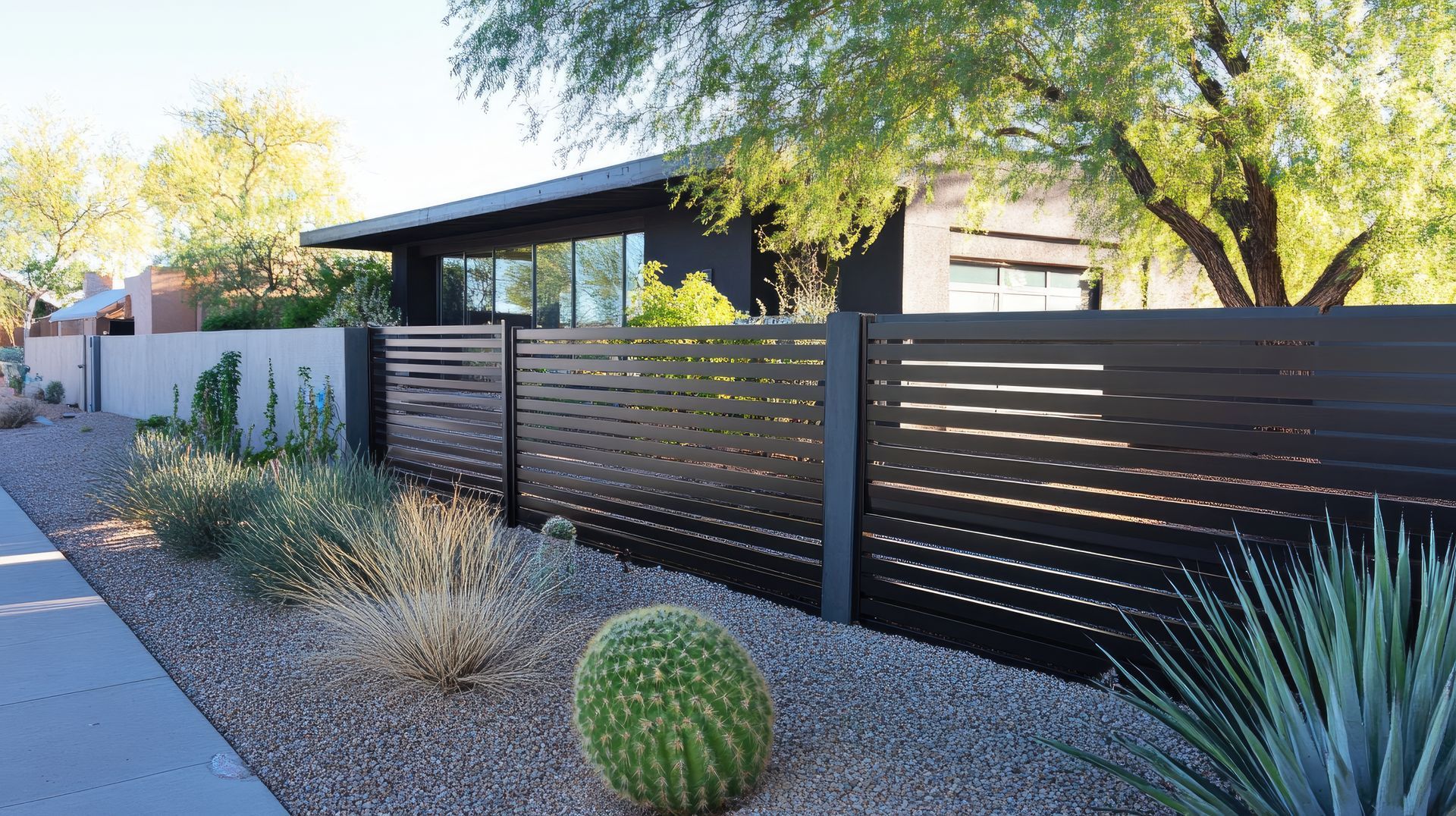
Residential Fencing and Dividing Fence Laws in NSW: Who Pays and How to Talk to Your Neighbour
Understanding dividing fence laws in NSW can save homeowners time, money, and neighbourly goodwill before a single post goes in the ground. This guide covers the key rules around residential fencing cost-sharing, how to communicate with your neighbour the right way, and what options are available to Central Coast, NSW, property owners when things don't go to plan.
What the NSW Dividing Fences Act Actually Says
NSW dividing fence law is clear: both neighbours share the cost equally. The Dividing Fences Act 1991 regulates neighbours' responsibilities towards dividing fences and is designed to settle the contentious aspects of sharing a fence. Adjoining owners are required to share equally the costs of a "sufficient dividing fence", and what is considered sufficient depends upon the circumstances of the case.
A "sufficient" fence is not necessarily the fanciest one. It is one adequate for the purpose, taking into account the standard of fences in the local area, the use of the land, and any council regulations. On the Central Coast, NSW, a standard Colorbond boundary fence or timber paling is considered sufficient for most residential fencing situations.
One important exception applies when one neighbour wants a premium upgrade. If one owner wants a fence of a higher standard, that owner is liable to pay the difference in cost. Likewise, if an existing dividing fence is damaged or destroyed by one owner or someone on the owner's land, that owner is liable to pay the whole cost of restoring it.
It is also worth knowing that councils and other government authorities are not required to contribute to the cost of dividing fences. If your land shares a boundary with a council or government authority, you will be solely responsible for the full cost.
How to Talk to Your Neighbour Before It Becomes a Dispute
Open, early communication is the single best way to avoid a fence dispute. Here is a practical step-by-step approach:
- Talk to your neighbour and put the agreement in writing, covering height, material, colour, position, cost split, and removal of any old fence.
- Serve a Notice to Fence. This is the formal proposal to build, repair, or replace, and it is the document the Act operates on. Send it by registered post so you can prove it was received.
- Your neighbour has 30 days from receiving the notice to reply. If they agree, you can start. If they disagree, negotiate a middle ground.
- A neighbour who constructs a fence without first consulting and reaching agreement with the other neighbour might not be able to recover half the costs in a court.
Nothing in the Act prevents neighbours coming to their own agreement, for example that one owner will pay the whole cost. A handshake deal that works for both parties is always an option.
What Happens if You Cannot Agree?
When talking it out does not work, formal options are available. Central Coast Council suggests contacting the Community Justice Centre (CJC) when neighbours are unable to agree on fencing issues. These government-funded independent centres specialise in settling differences between neighbours without entering into a complicated legal process.
If mediation also fails, you can apply to the NSW Civil and Administrative Tribunal (NCAT) or the Local Court for an order. A formal Fencing Notice sets out the proposed work, the estimated cost, and how expenses will be shared.
Do I Need Council Approval for a Dividing Fence on the Central Coast?
Not always. Many standard residential fencing projects qualify as exempt development, but always check with Central Coast Council before ordering materials.
Are There Any Fencing Materials Banned on Residential Boundaries in NSW?
Yes. Electric fencing and barbed wire are prohibited. Bushfire-prone areas require non-combustible materials. Check your property status on the NSW Planning Portal.
Getting the Right Fence for Your Central Coast Property
Choosing the right material matters for both compliance and longevity. The Central Coast's coastal environment can be tough on certain materials, making corrosion-resistant options a practical choice for residential fencing installations from Terrigal to Toukley.
Getting the process right from the start protects your investment and your relationship with your neighbours. Explore the full range of fencing products available to find an option that suits your property and complies with local requirements.
Ready to Plan Your Fence? T&D Fence Factory Can Help
T&D Fence Factory, serving the Central Coast, NSW, and surrounding areas, offers a wide range of residential fencing solutions including Colorbond boundary fencing, privacy screens, pool fencing, and garden fences. Whether you are replacing an old dividing fence or starting a fresh installation, their team can help you select materials that meet your needs and local regulations.
Call 02 4393 6336 or use the contact form online to get started. You can also find and review T&D Fence Factory on Google at T&D Fence Factory.